
The Health Sciences Lab System
A structured, performance-driven clinical framework designed to ensure consistency in clinical reasoning, while allowing fully individualized treatment and rehabilitation strategies.
How The System Works
Every patient goes through a consistent, high-standard pathway from diagnosis through rehabilitation and return to performance. While presented as steps, these phases do not always occur strictly one after the other — many overlap and occur at the same time depending on your unique presentation and goals.
Detailed Movement & Biomechanical Assessment
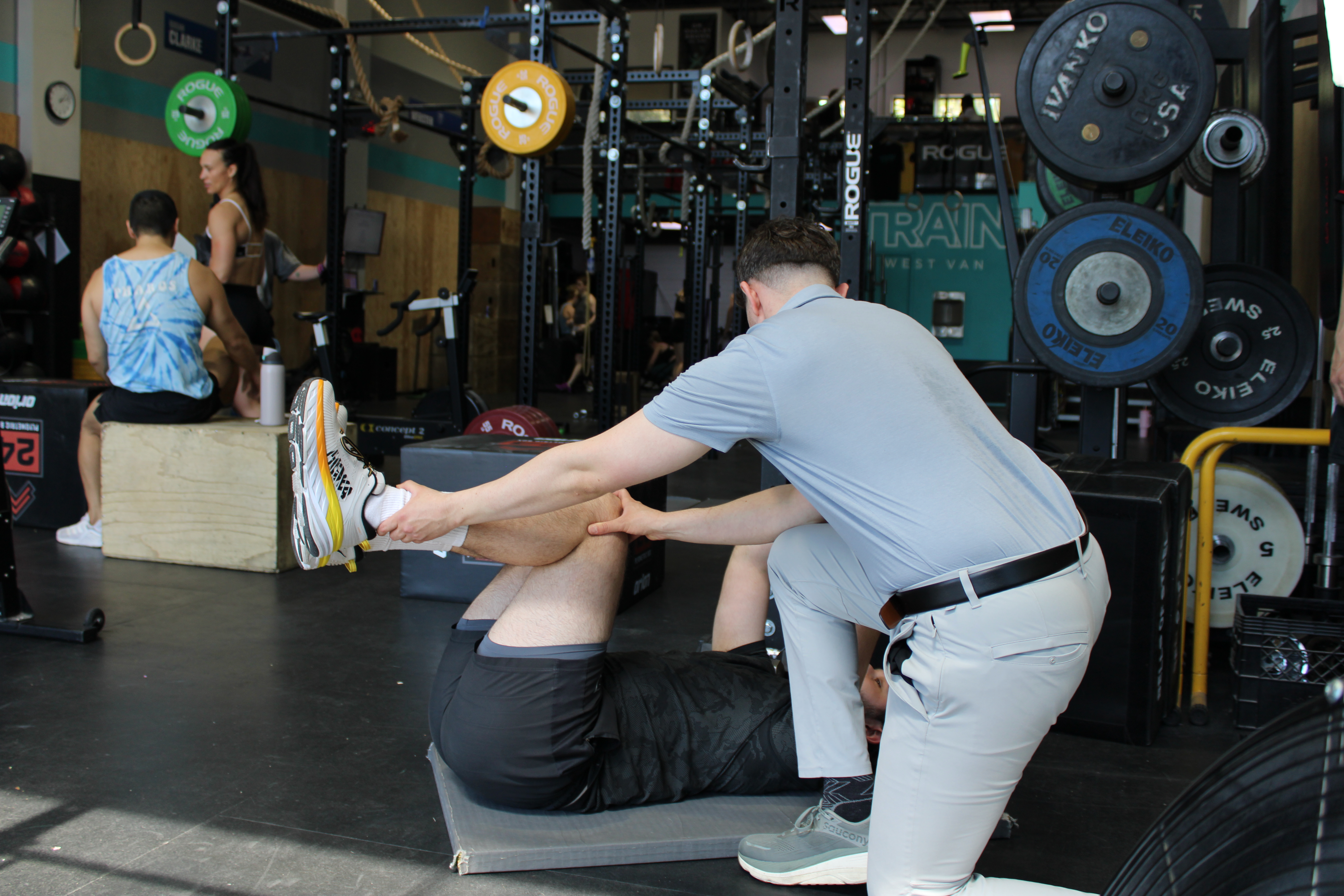
We don't just look at where it hurts. We utilize comprehensive movement screens to identify the root cause of pain, biomechanical compensations, and capacity limitations.
Targeted Manual Therapy & Symptom Management
Hands-on care, including Active Release Techniques (ART®) and chiropractic adjustments, to restore joint mechanics, improve tissue glide, and create a window of opportunity for pain-free movement.
Individualized Exercise-Based Rehabilitation
Moving beyond generic exercises. You receive precise exercise prescription tailored to your specific injury, sport demands, and current capacity.
Progressive Loading & Return to Performance
We safely bridge the gap between rehab and training. By managing training stress and implementing progressive load management, we ensure your tissues adapt and build resilience.
Continual Progression & Support
Most providers end care and communication after the visit ends. At Health Sciences Lab, your rehabilitation does not stop when you leave the clinic. Through our Hybrid program, you have access to your doctor for accountability, video form review, and program updates so you keep making progress between in-person sessions. Where a lot of programs fall short is that form is reviewed only in clinic and then key points are simply forgotten — leading to improper form at home, sub-par results, or being stuck doing the same exercises months later. This approach keeps you progressing and building confidence in your body and movement again.
Why Single-Modality Care Keeps Letting You Down
Here's what most patients are never told: each treatment that made you feel better was doing exactly what it was designed to do. Adjustments restore joint motion. Soft tissue work releases tension. Laser reduces inflammation. Stretching improves range of motion — temporarily. None of these are bad treatments. Every one of them has real value and a legitimate place in care.
But each one, on its own, addresses only one piece of a much bigger puzzle.
Think of your body as having a baseline of capacity — the activities you do without thinking. Walking the dog. Carrying groceries. Hiking with your family. Training for your next race. When your body is working well, you move through life at that baseline without giving it a second thought.
When something goes wrong — an injury, accumulated wear, a gradual loss of strength — you drop below that baseline. And most healthcare is designed to do one thing: get you back to it as quickly as possible. Adjust, stretch, ice, rest, repeat. You feel better. You go back to life. And then, inevitably, you drop below again — because nobody raised your baseline any higher or made it any more robust.
That is the fundamental limitation of single-modality care. It's not that the provider did anything wrong. It's that the model only addresses the immediate symptoms without ever identifying the root cause or building the capacity your body needs to stay above that baseline long-term. And often, the root of the issue isn't even where you feel the pain. A hip problem can drive knee degeneration. A core stability deficit can cause recurring low back flare-ups. A thoracic spine restriction can create a shoulder problem that no amount of rotator cuff exercises will fix. Until someone takes a holistic look at the full picture, the actual driver of the problem never gets addressed.
Relief is real and it matters. But relief alone creates a cycle — pain, treatment, relief, return to life, re-injury, pain. Over and over. If that cycle sounds familiar, it's because you've been living in it.
The way out isn't more of the same treatment. It's a system that addresses the full picture — not just the pain you feel today, but the reason your body can't handle the life you're asking it to live.
Your Exercises Should Be Prescribed, Not Guessed.
Personal trainers play an important role in helping people build fitness and strength — and many are excellent at what they do. But when it comes to your body's specific limitations, compensations, and injury history, a general training program isn't designed to account for those factors. Every exercise in your plan should be there for a specific clinical reason — based on what your assessment revealed, not a template.
Doctor-Programmed Protocols
- Based on clinical assessment of your movement, load tolerance, and compensation patterns
- Evidence-informed exercise selection tied to your specific limitations and imbalances
- Progressive protocols with built-in retesting to measure real progress
- Adjusted based on how your body responds — not a static spreadsheet
- Designed to build capacity where you need it most, not just where you feel it
Generic Training Plans
- Built for the average person, not your specific movement profile
- No clinical assessment of why you move the way you do
- No retesting to confirm progress is actually being made
- Same exercises regardless of injury history or compensation patterns
- Progress based on adding weight, not on whether your body is ready for it
Your body has a unique movement signature — specific limitations, compensations, and capacity gaps that no template can account for. Dr. Oakley programs every exercise protocol based on evidence-based testing and retesting of your progress, tied directly to what your assessment revealed. This is clinical-grade progression designed to build you back stronger, in the right places, at the right pace.
Built on Evidence.
Driven by Performance.
The Health Sciences Lab System is grounded in understanding how movement, training stress, and recovery interact to influence both injury risk and athletic output.
Expected Recovery Timelines
Every injury is unique, but understanding biological healing times helps set clear expectations for your rehabilitation journey.
Acute Muscle Strains
2-4 WeeksSimple Joint Sprains
3-6 WeeksTendinopathies
6-12 WeeksChronic Pain / Dysfunctions
3-6 MonthsPost-Operative Rehab
6-9+ Months* Recovery timelines vary depending on the injury, individual factors, and the demands you need your body to meet. While tissue healing follows a natural process, rehabilitation plays an important role in restoring the strength, mobility, and capacity needed for a successful return to activity.
Tissue Adaptation Timelines
Building capacity takes time. Here is how long it typically takes for different tissues to structurally adapt to training and rehabilitation loads.
Neuromuscular (Motor Control)
1-3 WeeksMuscle Hypertrophy (Size/Strength)
6-8 WeeksTendon & Ligament Remodeling
3-6 MonthsBone Remodeling
6-12+ MonthsNerve Regeneration
12-24+ MonthsExperience the System
Ready to move better, recover faster, and perform longer? This system is designed to help you build a body that can handle the demands of your training and lifestyle — so you can stay active for life. Book your complimentary discovery call to see if our clinical framework is the right fit for your goals.